Bedding • Sleep Comfort
Down Comforters, Decoded: Choosing Warmth Without Excess Weight
A comforter can feel cloudlike and cocooning—or surprisingly heavy and too warm. The difference is rarely explained by a single number. Fill power, fill weight, construction, shell fabric, room temperature, and your own sleeping preferences all shape the experience. Understanding how those details work together makes it easier to choose a down comforter that feels insulating without weighing down the bed.
Published October 22, 2026
The appeal of a lighter kind of warmth
Down has a particular talent for holding warmth while remaining airy. Its soft clusters create small pockets that trap still air, forming insulation without requiring a dense, heavy layer of material. That is why a well-chosen down comforter can feel lofty and enveloping rather than compact or cumbersome. But “down” does not automatically mean lightweight, and a lofty comforter is not automatically the warmest choice for every bedroom.
The most comfortable bedding is a matter of balance. A warm apartment, a drafty bedroom, a cool sleeper, and someone who tends to overheat may all call for different levels of insulation. Two comforters that look similarly plush can behave quite differently once they are on the bed. One may provide high loft with a relatively light hand; another may use more fill, a denser shell, or a construction that creates a warmer, more substantial feel.
For a useful comparison, separate three ideas that are often blurred together: fill power, which describes the loft of down; fill weight, which tells you how much filling is used; and construction, which affects how evenly that filling is distributed. None is a complete measure on its own. Together, they offer a more revealing picture of warmth, weight, and everyday comfort.
Fill power: loft, not a warmth guarantee
Fill power measures how much space a given weight of down occupies under a standardized test. In practical terms, it is an indicator of loft: higher-fill-power down expands more for its weight, creating a fuller, airier structure. Because trapped air provides insulation, a higher number can suggest efficient warmth with less filling than a lower-loft alternative.
That distinction matters when you want a comforter that feels lofty without being heavy. Higher fill power can make it possible to achieve a generous-looking, light-feeling bed with less down. Yet fill power does not tell you how much down is inside the comforter. A high-loft comforter with a modest fill weight may be less insulating overall than a lower-fill-power comforter containing a substantially larger quantity of down.
Think of fill power as a description of the down’s capacity to loft, not a direct rating of how warm the finished comforter will feel. It is useful for comparing materials, but it cannot stand in for the rest of the specification. Look for the fill weight as well, and check whether the warmth level is described in a way you can relate to your home climate and sleeping habits.
Labels and product descriptions do not always present details in identical ways. If a listing provides fill power but not fill weight, the actual amount of insulation may be difficult to assess. If it gives a warmth classification without explaining the construction or intended use, treat that label as a helpful starting point rather than a universal standard. When the information is incomplete, the best next step is to consult the manufacturer’s description or care guide before deciding.
Fill weight: the amount of down in the comforter
Fill weight is the weight of the down inside the comforter, usually listed for a particular size. It provides important context for interpreting fill power. More fill generally means more insulating material, but it can also mean a heavier or warmer comforter. The final result still depends on the down’s loft, how it is arranged, the comforter’s dimensions, and the shell fabric.
Size is especially important when comparing specifications. A larger comforter requires more material simply to cover a larger area, so its fill weight should not be compared casually with that of a smaller size. Even within one product range, the amount of fill may vary by bed size and warmth version. Compare like with like: the same dimensions, the same construction, and, wherever possible, the same stated warmth category.
If you prefer a light cover and sleep in a warm room, a lower fill weight may make more sense than choosing the fullest option available. If your bedroom is chilly or you sleep cold, more fill may be welcome. The goal is not to find the smallest number or the loftiest specification; it is to select enough insulation to feel comfortable without waking too warm or feeling trapped beneath the bedding.
When product details are available, read them as a set. Fill power helps explain how efficiently the down lofts. Fill weight shows the quantity used. Dimensions establish the area being covered. The combination is more useful than any single headline claim and can help distinguish a dramatic-looking comforter from one designed for genuinely substantial warmth.
Baffle construction and the architecture of a comforter
A comforter’s exterior may look smooth and simple, but its internal construction determines how the filling is distributed. In baffle-box construction, narrow fabric walls join the upper and lower shell, creating three-dimensional compartments. These chambers give the down room to expand and help keep it from migrating into thin, empty patches.
That internal space matters. Down compressed into shallow compartments cannot loft to its full potential, while well-proportioned baffles allow it to rise. Consistent loft helps reduce cold spots and creates a more even field of insulation across the bed. In this way, construction can influence both perceived warmth and the comforter’s visual profile.
In sewn-through construction, the top and bottom shell fabrics are stitched directly together. The resulting compartments are flatter, which can limit the amount of space available for loft. At the stitched lines, there is also less insulation than in the filled sections. This approach can create a lighter, lower-profile comforter that suits mild conditions or people who prefer less loft, though those seam lines may feel cooler than the surrounding areas.
Neither construction is automatically best. Baffle boxes can support a fuller, more even loft, but a high-loft, generously filled version may be too warm for a heated room. Sewn-through designs can offer a more restrained layer, but may not provide the same uninterrupted insulation. Consider how evenly you want warmth distributed, how much loft you enjoy, and how often the bed feels too warm or too cool.
Also pay attention to the shape and spacing of the compartments. Smaller boxes can help keep fill more evenly positioned; larger chambers may allow a more expansive loft, depending on the design. Look for secure, consistent stitching and an even appearance. Over time, regular shaking and careful laundering, when permitted by the care label, can help the filling recover its loft and remain more evenly dispersed.
The shell fabric: the quiet influence
The shell is the fabric that contains the down, but it also has a direct influence on how a comforter feels. A tightly woven shell helps keep fine down from escaping through the fabric. The weave, fiber, finish, and overall hand can affect softness, breathability, sound, and the way the comforter drapes over the bed.
Cotton is a familiar shell choice, with a range of weaves and finishes. A smooth, crisp cotton can feel cool and clean against the skin, while a softer finish may create a more relaxed hand. Thread count alone does not tell the whole story: yarn quality, weave structure, finishing, and the tightness needed to contain down all contribute to the fabric’s performance.
For people who are sensitive to warmth, a shell that feels breathable and comfortable against the skin may make the bed more pleasant. But a shell cannot compensate for an overfilled comforter in a hot room. Similarly, a very light-feeling cover does not necessarily provide enough insulation for a cold sleeper. Consider the shell as one part of the sleep experience, not a shortcut to determining the comforter’s overall warmth.
It is also worth checking whether the shell’s texture and sound suit you. Some fabrics feel crisp or rustle slightly as you move; others are softer and quieter. Those details are personal, but they matter: bedding is in close contact with you for hours, and a beautiful specification is of little use if the fabric does not feel inviting.
Match the warmth to your room and your sleep
Bedroom temperature is one of the most practical guides to choosing a down comforter. A well-insulated home with steady heating may call for less fill than a room that cools significantly overnight. Drafts, window exposure, heating schedules, and the season all influence how much insulation feels right. Rather than buying for the coldest night of the year, consider the conditions in which you sleep most often.
Your personal warmth preference matters just as much. Some people like the sensation of a warm, enveloping bed; others want a light cover and an open, breathable feeling. If you frequently kick off the bedding, wake sweaty, or find a thick duvet difficult to sleep under, those are useful clues that the current insulation level may be too high. If you wake cold despite layering, the comforter may need more warmth, or your bedding may need better coverage.
Consider the entire bed, not just the comforter. A mattress protector, sheets, sleepwear, blankets, and the number of people sharing the bed all change the overall microclimate. A person who sleeps comfortably under a light layer alone may feel warmer when sharing a bed. Likewise, a heavy blanket on top of a down comforter can turn a moderate setup into an overly warm one.
When preferences are uncertain, a flexible approach can be more useful than choosing an extreme. A medium-weight comforter paired with a separate lightweight blanket lets you adapt as the weather changes. It is easier to add a layer on a cold night than to make an excessively warm comforter feel cooler. The most adaptable setup allows warmth to be adjusted without replacing the whole bedding ensemble.
Layering, coverage, and the shape of the bed
Layering gives a comforter a wider seasonal range. In transitional weather, a lighter down comforter can work on its own. When temperatures fall, add a blanket beneath or above it, depending on the feel you prefer. A separate layer lets you change the bed gradually, rather than relying on one very warm comforter throughout the year.
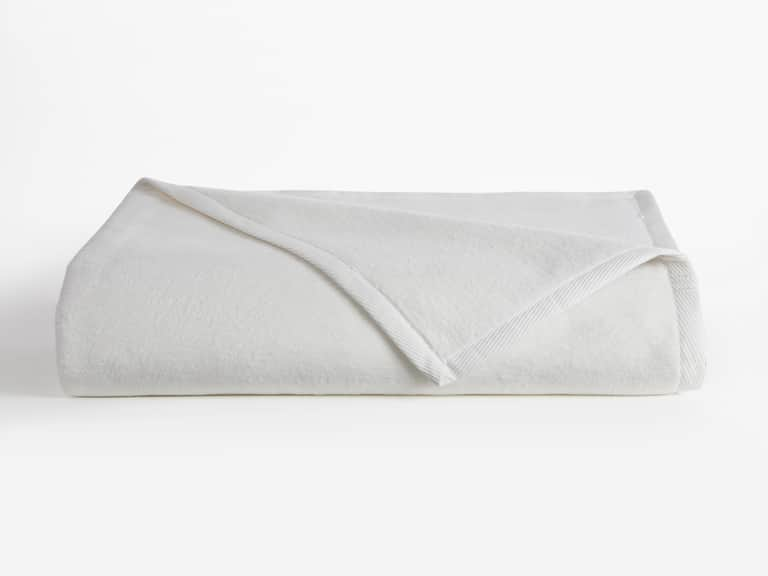
For a breathable alternative layer, a silk blanket can add a soft, lightweight layer without making the arrangement feel as bulky as a heavy cover. It is a blanket, not a down comforter, and it serves a different role: an additional layer whose natural fiber is described as breathable and temperature regulating. Follow the product’s own care instructions, and consider how it feels alongside the rest of your bedding.
Proper sizing also changes comfort. A comforter that barely reaches the mattress edges may leave gaps when you turn or share the bed. One with generous dimensions can provide more dependable coverage, though it may also hang lower and feel more substantial. Check the actual measurements rather than relying only on a size name, since dimensions can differ among makers and designs.
Think about the bed’s proportions, the height of the mattress, and how much drape you want on each side. If two people share the bed, wider coverage can help reduce nighttime tugging. If the bed is against a wall or has a low frame, a particularly long drop may not be necessary. The right size should feel generous enough to stay put, without creating a bulky pile that is difficult to manage.
Care, longevity, and everyday practicality
Down comforters require care that respects both the filling and the shell. Always follow the manufacturer’s instructions, since washing recommendations vary by product. Some comforters may be machine washable in an appropriately sized machine; others may require professional cleaning. A household washer that is too small can compress the comforter or prevent thorough rinsing, while excessive heat can damage materials or affect the fabric finish.
Between washes, airing and gently shaking a comforter can help restore its loft and redistribute filling. A duvet cover provides a practical barrier against everyday dust and body oils, reducing the need to clean the comforter itself as often. Make sure the comforter is completely dry after any cleaning process, since lingering moisture can affect both comfort and freshness.
Storage matters, too. When the comforter is not in use, avoid compressing it for long periods in a small bag. A breathable storage space allows the filling to retain its loft better than tight compression. Check the care instructions for specific recommendations, especially if you are putting a seasonal comforter away for several months.
Care needs are part of the buying decision, not an afterthought. Before choosing, ask whether the recommended cleaning method fits your household, whether you have access to the necessary equipment, and whether you are comfortable using a duvet cover. A comforter can be beautifully made and still be inconvenient if its maintenance does not fit your routine.
A considered checklist before you choose
When comparing down comforters, read the details in a deliberate order. Begin with your room temperature and sleep preference, then assess the product’s measurements, fill power, fill weight, construction, shell, and care instructions. If any specification is missing, do not assume that a luxury finish or a generous loft tells the whole story.
- Room climate: Is your bedroom consistently warm, cool, or variable overnight?
- Personal warmth: Do you tend to sleep hot, cold, or somewhere between?
- Fill power: What does the loft rating suggest about the down’s ability to expand?
- Fill weight: How much filling is used in the size you plan to buy?
- Construction: Do you prefer the fuller loft of baffle boxes or a flatter, more restrained profile?
- Shell fabric: Does the fabric feel and sound like something you will enjoy sleeping under?
- Dimensions: Will the comforter provide enough coverage for the mattress and the people sharing it?
- Care: Can you follow the cleaning and storage requirements over time?
Use this checklist to narrow the field, not to search for a universal ideal. A high fill-power rating is not a promise of the perfect night’s sleep, and the warmest option is not necessarily the most luxurious one. The best choice is the comforter that gives you a calm, comfortable temperature in the room you actually sleep in—and that remains manageable through the seasons.
The most elegant comfort is the right amount
In bedding, excess is not always a virtue. A comforter that is too warm can interrupt sleep just as surely as one that is too light. The aim is a layer that feels reassuring but not restrictive: enough loft to hold warmth, enough breathability to avoid a stifling bed, and a construction that keeps insulation evenly distributed.
Fill power explains how effectively down lofts; fill weight clarifies how much of it is present. Baffle construction shapes the space in which it can expand, while shell fabric influences the hand and feel of the finished piece. Add bedroom temperature, personal preference, sizing, and care to the equation, and the buying decision becomes less mysterious.
A thoughtful comforter does not need to announce itself with unnecessary weight. It should settle naturally over the bed, hold warmth in a way that suits your nights, and adapt gracefully when the season changes. Choose for your room, your body, and your routine—not for a number in isolation—and the result is a more considered kind of comfort.